Sir Galileo Galilei
Category - Remarkable Geniuses
Sub Category - History of Astronomy
Author name - Ali Ahmad Khan
Date of Publication - 1 Oct, 2025
Last Updated - 1 Oct, 2025
Estimated reading time - 15 min - 20min
Tags - Universe, Astronomy, Genius, Invention
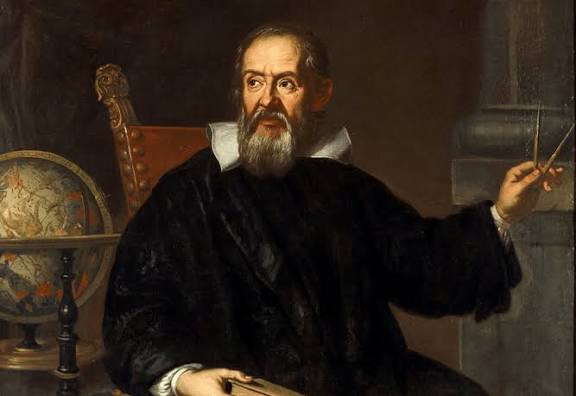
Galileo Galilei provided the critical evidence to support the Copernican theory. Galileo was known by his first name like Tycho. He worked at the same time that Kepler was working on his orbital theory. As early as 1597, Galileo wrote to Kepler that:
"like you, I accepted the Copernican position several years ago... I have not dared until now to bring my ideas into the open."
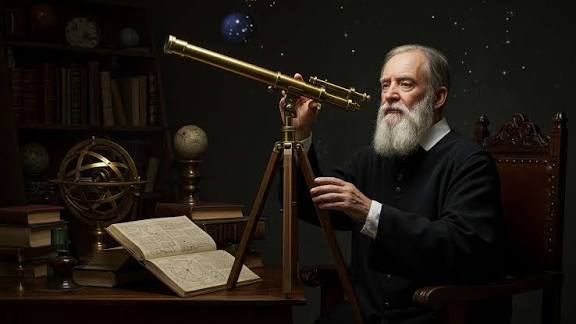
In one of the most dramatic episodes in the history of science, Galileo's scientific views took him on a collision course with the Catholic Church. Galileo was born in Pisa, Italy, and although he had to leave school because of financial difficulties, he returned to complete his studies in mathematics. He became a professor at the University of Padua, where he stayed for 18 years. Around 1609, probably in Holland, makers of eyeglasses discovered that they could combine lenses to magnify. This discovery led to the invention of the telescope. Galileo's brilliant idea was to turn the newly invented telsecope skyward for a systematic study of the heavens. His first telescope had a magnification of only a factor of 3 and could be duplicated today for a few buck's worth of materials. Even his best telescope, with a magnification of a factor of 30, was inferior to good quality modern binoculars. But the discoveries changed the way people thought of the universe forever. Galileo observed mountains and plains on the Moon, proving that it was not a polished sphere of supernatural ord of the "perfect" celestial realm, but a geographical world like Earth. He detected sunspots on the surface of the SUn and tracked their motion, deducing that the Sun rotated once every four weeks. The Sun was therefore not perfect either, and if it could rotate, why not the Earth? Equally important was his discovery and subsequent observations of four moon near Jupiter. He showed that these moons orbit Jupiter just as the Moon orbits the Earth. This disproved the idea that everything moves around the Earth.
The most important observation for the debate about the Copernican model involved the phases of Venus. In the Ptolemaic model, Venus is always between the Earth and the Sun, so it will always show a cresent phase since most of the lit side faces towards the Sun. In the Copernican model, Venus can sometimes lie between the Earth and Sun, when it will have a new cresent phase. But there are parts of the orbit where it lies on the opposite side of the Sun as the Earth when we see a full phase as the lit side faces back at us. There is a major distinction between the geocentric and the heliocentric predictions. By studying the illumination of Venus over a period of months Galileo showed that Venus went through a full cycle of phases. Not only that, but the full phase occured when the angular size of Venus was the smallest, as the Copernican model would predict. This was compelling evidence that the heliocentric view was correct. Why did Galileo's debate with the Church turn ugly? (Part of the reason was undoubtedly Galileo's cantankerous personality since he was never one to shy away from an argument or a confrontation). During the time of Copernicus, the heliocentric model was a mathematical abstraction - a hypothesis that presented no real threat to the established order. Then Galileo used his telescope to dethrone Earth from its special place at the centre of the cosmos. It was just one of a number of worlds scattered through space. Galileo lectured and published in Italian rather than Latin, which was the traditional scholarly language. In this way, he reached many people, he presented the Copernican model as an established fact.
During his long period of house arrest, Galileo completed his other major work on mechanics or the science of motion. Aristotle had taught that rest was the nature state of any object and that a heavier object would fall faster than a light one. Galileo showed that both these ideas were wrong. He compared the motions of balls of different weights rolling down inclined planes, using his pulse as a timing device. The inclined plane was just a device to slow the motion down enough that he could measure it. He never actually dropped objects from the Leaning tower of Pisa; that was a story told by a student after he died. Galileo realized that friction on a surface or air resistance would affect the motion of a falling object. If these effects were minimized, a ball rolling on a flat surface would keep rolling. Uniform motion was just as natural as rest. In addition, objects of any material would fall toward Earth in the same way. The acceleration, or rate of change of velocity, does not depend on the weight or composition of the object.Many of Galileo's ideas in mechanics were relevant to the motions of objects in space. He came up with the concept of inertia, the resistance of any object toa change in its motion. If a ball is dropped from the most of a tall ship, it will not fall behind the ship but will continue with the forward motion of the ship and land at the base of the mast. If the atmosphere is being carried with the rotation of the Earth then we might not feel our motion in space, Galileo supposed. Similarly, someone confined to the cabin of a smooth sailing ship could do experiments and never be aware of their motion. Galileo was convinced by these arguments that the Earth could be in motion without our being of it. In this way, yet another of the objections to the heliocentric model was overcome.
Why is Galileo important in the history of science? He was a pioneer of observational astronomy. He completed the Copernican revolution with his telescopic observations. In a broad sense, he was the first modern scientist. Rather than accept the established wisdom on any subject, he conducted his own experiments. As any modern scientist would, he preferred to read the "book of nature".
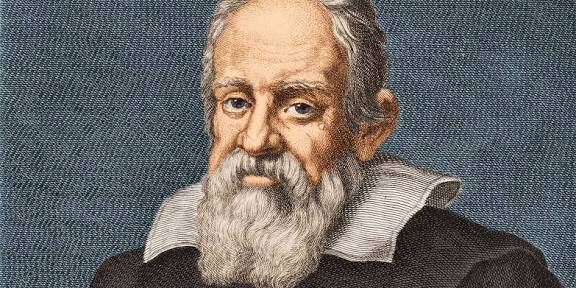
The Trials of Sir Galileo Galilei
On the first day of October in 1632, the dreaded inquisitor of Florence, Italy knocked on the door of the famous astronomer, Galileo Galilei and served him with a summon to appear before the inquisitor in Rome within 30 days. The noted scientist was being forced to answer charges that he had promoted heresy in his latest book. Galileo was 68 years old, and these charges were extremely serious. Anyone found guilty of heresy could be sentenced to death. What was Galileo's crime according to the Catholic Church? Galileo had taken a stand against traditional views about the nature of the universe. He presented startling new evidence that our planet is not at the center of the universe. Galileo's own work, plus that of other scholars, had clearly convinced him that Earth and other planets moved around the SUn. These ideas seemed strange at the time. When people looked out from Earth, it certainly seemed that Earth was stationary and at the center of things, as if all bodies in the sky moved around as.The slow and difficult progress of Galileo's ideas shows how science works, sometimes in the face of opposition. Also, this new thinking was part of a famous revolution that affected the way all humans have thought about their place in the universe. The radical new idea that Earth is not a unique central body, but only a typical and average part of the universe, is called the Copernican revolution. This revolution in our sense of our place in the universe is named after the polish scientist Nicolaus Copernicus, who had suggested in the 1500s that Earth was not at the center of the solar system. The Copernican revolution is one of the most important dates in history because it indicates that we are part of a larger cosmic environment, not the masters of nature living in the capital of the universe.
Galileo had come under fire from the Church for publicly advocating the idea of Copernicus. He had published his initial conclusions supporting Copernicus in 1610. Six years later, a high ranking Catholic official visited Galileo and advised him that Copernicus's view went against the teachings of the Roman Catholic Church. The official directed that Galileo should not "hold or defend" these views, although he might discuss them as hypotheses. Galileo was shaken by this encounter but the pressure did not stop him from continuing his scientific work. Early in 1632 Galileo had published his masterwork. A dialogue on the Great World Systems, in which two fictional characters debate whether or not the Earth is central. This is the book that got Galileo in trouble with the Church because he presented the Copernican idea in strong plain language and he used the rhetorical device of having the less clever character unsuccessfully defend the Church's position. After he received the summons to appear before the inquisition, Galileo surrendered himself in Rome. The trial began in 1633. The surviving transcript shows the dilemma Galileo faced. In the beginning, Galileo was sure he could clear himself. One of the first questions from the inquisitors was about what had happened during the cardinals visit in 1616. Galileo described the visit and presented as evidence a 1615 letter from the Cardinal commending him for "Speaking only hypothetically and not with certainty" about these ideas. A second letter from the Cardinal written in 1616 gave the order that "the Copernican opinion may neuther be held nor defended, as it is opposed to Holy Scripture". Based on these letter, Galileo argued that his book debating the sides of the argument was within the spirit of the instructions he had been given.
According to the inquisitors, Galileo had clearly leaned toward Copernicus. Worse yet, the inquisitors produced their copy of the Cardinal's instructions, which contained an added phrase that Galileo was not to teach that opinion in any way whatsoever. Galileo brandished his letter and denied that he had ever been told this last phrase. Some modern scholars believe that the inquisitors document was a forgery written by them after 1616. In any case, only one thing would satisfy the inquisition. Galileo had to renounce his belief in the Copernican idea and deny that Earth moved around the Sun. The inquisitors showed Galileo - by then an old man of 70 - the instruments of troture that might be used on him if he refused to cooperate. There was also a real possibility of his being burned at the stake, which had happened to the mysitc and astronomer Giordano Bruno 33 years earlier. Galileo faced an impossible moral dilemma. Should he risk death to defend his scientific observations in front of the secret inquisition court, or should he recite a confession that would satisfy the judges and live to fight another day? He gave his answer. Even under the threat of death, he told them , he woul never say that he was not a good Catholic or that he had tried to decieve anyone. However, under duress, he would be willing to say that he did not believe in the new Copernican idea. in the end, he trusted that copies of his book would get out and that the scientific evidence would speak for itself. He begged the judges to "take into account my pitiable state of body illness, to which,at the age of 70 years. I have been reduced by ten months of constant mental anxiety". The trial cam to a climax on June 22, 1633, when Galileo was summoned to kneel before the judges to hear his sentecne and recite a confession of error. The judges read a lengthy condemnation that included the Church's strong opposition to the Copernican revolution. Galileo was sentenced to house arrest for life. The inquisitors ordered his book banned. He had to repeat his confession in public, saying that he would "abandon the false opinion that the Sun us the center... and that the Earth is not the center and moves", and vowing to "abjure, curse and detest the aforementioned errors and heresies...".
There are several postscripts to this story of the confrontation between Galileo and the Catholic Church. As Galileo had hoped, his book was published elsewhere in Europe, and within a few decades, his ideas were widely accepted, The church could not stop the spread of new scientific ideas. In 1757, Galileo's book was removed from a list of books banned by the Catholic Church. In 1983, Pope John Paul II took up Galileo's case, and in 1992, he formally proclaimed that the Church had erred in condemning Galileo, and that science is a valid realm of knowledge "which reason can discover by its own power". This story perhaps makes clearer something that puzzles many people today why academics, scientists and intellectuals are so concerned about maintaining the freedom to pursue and express controversial views. The real point of Galileo's story is not the conflict between science and the Church, it is the fact that entrenced ideology is the enemy of human understanding. As shown by Italy in the 1600s, or Germany in the 1930s, or the Soviet Union in most of this century - and even by episodes in the United States - it is very easy for an overzealous society to silence the voices of people who express unpopular ideas. History shows that umpopular ideas , like Galileo's may turn out to be true ! ! !
This blog post is written by Ali Ahmad Khan and the source of information is solely his knowledge....